

Quality Assurance
Approved by 3C and a perfect quality control system has been estabished.Our tyres exported to Southeast Asia, the Middle East, Africa and other countries and more than 20 domestic provinces and regions. Tianzhong Tyre is committed to be the first choice of customers in the world who need high safety and high value tyres.
On-time Delivery
Once you place your order, we will immediately incorporate your order into our tight production schedule to ensure on-time delivery.Once your order is shipped, we will immediately send you a shipping notification and full shipping tracking information until you confirm receipt of the goods successfully.
Efficient After-sales Service
We respect your feedback after receiving the goods.We provide 18 months warranty service after the goods arrive.We deal with your complaints within 48 hours.
Professional Team
We value every customer's enquiry and we will ensure that we provide a competitive quote quickly.aWe are a professional team with all technical support from our technical department
What is Agricultural Radial Tyre
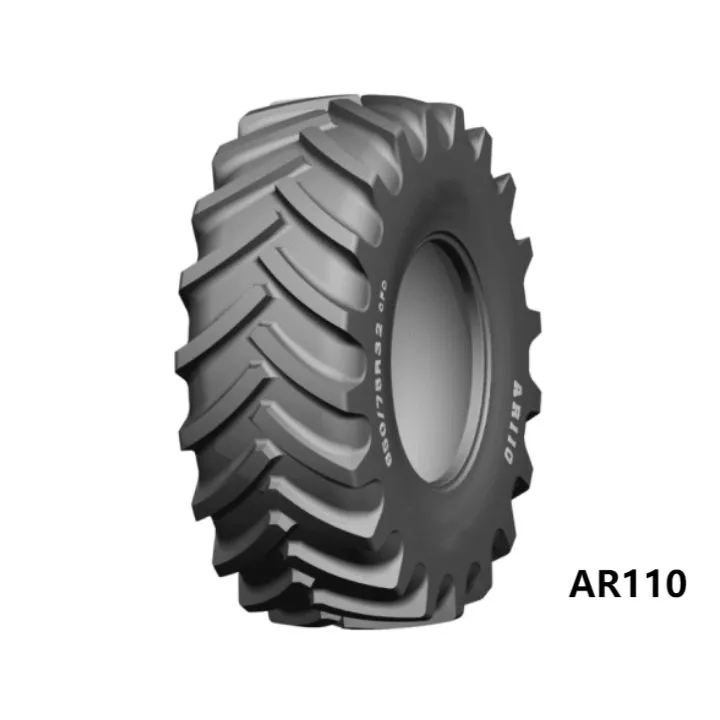
A radial tire is a tire that the body plies run radially across the tire, perpendicular to the circumference of the tire. That allows the tire to flex more and permits a bigger footprint.Radial tires have reigned supreme in agricultural work for almost 50 years, after emerging in the 1970s and besting the bias-ply tire design. These are almost always the ideal solution for large, heavyweight tractors and farm equipment, and agricultural users can get more work done faster in the field.




Better Comfort and Control
The radial farm tire design offers a bigger footprint and is designed to provide a smoother ride on different surfaces.
Better Traction
The more pliable radial tire construction increases contact area and will allow the tire to exert greater traction. It distributes weight more evenly and it's more adept at handling off-road or wet road surface conditions.
Better Fuel Economy
Radial tires have lower rolling resistance - it takes less effort for the tires to roll over the terrain - so they build up less heat and achieve greater fuel economy. Radial tires with AD2 technology can carry even more load at lower inflation pressure.
Run Cooler
Again, radial tires better dissipate and manage their heat when in use. This helps the tires run cooler, improving tread life, and lengthening the overall lifespan of the tire.
Less Soil Compaction
Radial tires have a larger footprint that distributes weight more evenly over large areas. They can also operate at lower inflation pressures than their bias counterparts. Agricultural users can achieve less soil compaction and greater crop yields with this design by managing inflation pressures to match the load to the required inflation pressure.
Longer Lasting & Easier Repairs
Agricultural tires are a long-term investment. Radial tires achieve longer and more even tread wear and are more resistant to cuts and punctures in the tread making repairs less often and sometimes designed to resist cuts and punctures in the tread. Combine that durability with better heat management, and this tips the scales for the radial tire.
Rubber
Natural and synthetic rubber combine to make up the core component of your tyre. The properties of rubber provide slip resistance and elasticity which are both very important for tyre production.
Antioxidants
To help prevent the tyre from the effects of oxygen exposure, antioxidants are included in the core ingredients.
Textiles
Fabric is used to reinforce the tyre and increase its strength. Various materials such as rayon, nylon and polyester can be used to form the plies that make up your tyre's skeleton. By using fabric, you can enhance a tyre's elasticity.
Steel
Steel is used to form the tyre's belts and beads which help to stiffen up the tyre and help to lock the tyre to the wheel.
Cotton Picker Radial Tyre
Agricultural cotton picker radial tyres are a kind of specially designed tyres specifically for cotton picker equipment, due to the need to adapt to different terrain and climate conditions when the cotton picker is in operation, especially during the cotton ripening season, it may encounter wet mud, soft ground or other complex ground conditions. Therefore, the radial structure design and special tread pattern design used in this type of tyre enable it to provide a larger grounding area when contacting the ground, thus reducing compaction on the soil, and at the same time increasing the grip and abrasion resistance of the cotton picker, so as to ensure that the machine can be operated stably during operation, improve operational efficiency, and reduce damage to the cotton.
Harvester Radial Tyre
Agricultural harvester radial tyre is a kind of special tyres designed for agricultural machinery, made of high quality rubber materials, wider tread, tread depth is larger and "herringbone" pattern, harvester radial tyres special tread and structural design makes the tyres have a high load carrying capacity, good traction good abrasion resistance and resistance to cuts. These tyres are mainly used for agricultural machinery such as harvesters, tractors and other farmland operation machinery vehicles.
Green Storage Machine Radial Tyre
Agricultural green storage machine radial tyres are a kind of tyres specially designed for agricultural machinery. Green storage machine radial tyres are made of high-strength rubber material with special tread design, which makes these tyres have higher load capacity, strong traction, good puncture resistance and abrasion resistance with excellent self-cleaning properties. These tyres are mainly suitable for various agricultural machinery, such as green storage machines, corn combine harvesters, tractors or harvesters in the agricultural environment.

Components of Agricultural Radial Tyre
Ply
The plies are the layers of fabric that make up your tyre's skeleton and are typically made of fibre cords that are woven together and coated with rubber. These allow your tyre to be flexible but not elastic. A layer called the carcass ply placed directly above the inner liner gives your tyre its strength.
Beads
The beads are made from high-strength steel coated in rubber and create an airtight seal between your tyre and the rim of the wheel.
Belt
Steel belts are placed around the tyre to reinforce strength and provide rigidity. These are made of woven sheets of steel wires that are coated in rubber. Sometimes Kevlar cord is also added for extra strength, puncture resistance, and durability.
Sidewall
This is the area of extra-thick rubber that runs from the bead to the tread and gives your tyre its lateral stability. It's also where you'll find all of the manufacturer information about your tyre.
Shoulder
Your tyre has a small, bevelled edge where the tread meets the sidewall. Its design and construction play an important role in how your tyre helps you take corners.
Tread
This is the soft area of your tyre where the rubber meets the road. The tread provides both cushioning and grip, and its design and compound determine many of your tyre's most important performance features.
Sipe and groove
The tread blocks are separated by the deep grooves that allow your tyre to disperse water, snow and mud. Sipes are the smaller grooves or cuts made in the tread blocks themselves that give extra grip, which is especially important in a tyre made for snow and ice.
Determine the Tyre Size
The first step in choosing the right agricultural tyre is determining the size. Tractor tyres are available in a variety of sizes and designs. It is crucial to select the appropriate size based on the weight and power of the tractor. An incorrect size may cause the tractor to lose traction, reduce fuel efficiency, and cause severe damage to the tyre.
Consider the Soil Type
The soil type is another essential factor when choosing the right farm tyre Different soil types require different tyre designs. For instance, heavy and wet soils need tyres with deep treads and narrow spacing between the treads. These tyres help to prevent the tractor from getting stuck in the mud. On the other hand, soils that are lighter and drier require tyres with shallow treads and wider spacing between the treads.
Determine the Load Capacity
The load capacity is the maximum weight that an Ag tyre can carry. The ply rating of the tyre determines the load capacity. Ply rating refers to the number of layers of material used to construct the tyre. Tyres with a higher ply rating can carry heavier loads than those with a lower rating.
Choose the Right Tread Design
The tread design is another critical factor when choosing farm tractor tyres. Tread design refers to the pattern on the surface of the tyre. The tread design determines the traction and flotation of the tractor. The choice of tread design depends on the soil type, weather conditions, and the intended use of the tractor. For example, a tractor used for heavy tillage requires tyres with deep and aggressive treads to provide traction and reduce slippage.
Consider the Weather Conditions
Weather conditions are also essential to consider when choosing the right Ag tyre. Tractor tyres are available in different designs for different weather conditions. For instance, tyres designed for snowy conditions have a different tread pattern than those intended for wet conditions.
Determine the Role of Future Tyres
Identify the specific tasks and conditions your tractor will be used for and select tyres that are suitable for those tasks. For example, if you use your tractor primarily for ploughing and cultivating, you will need tyres with good traction and grip to ensure your tractor can work efficiently in wet or muddy conditions. On the other hand, if you use your tractor mainly for transportation, you should focus on selecting tyres with a higher load capacity to ensure the safe and efficient transport of heavy loads.
Raw Material Selection
The process begins with the careful selection of raw materials. High-quality natural and synthetic rubbers form the primary base, while additional materials like carbon black, silica, and other chemical additives enhance the rubber's properties. These materials are chosen for their ability to withstand the harsh conditions and heavy loads typical in industrial applications.
Mixing and Compounding
Once the raw materials are selected, they undergo a mixing process in which the rubber compounds are blended with various chemicals to achieve the desired characteristics. This step involves sophisticated machinery that ensures a homogeneous mixture, which is critical for the tire's performance and durability. The compounded rubber is then cooled and prepared for the next stage.
Tread and Sidewall Preparation
The mixed rubber compound is extruded into sheets to form the tire's tread and sidewalls. The tread is designed to provide traction and wear resistance, while the sidewalls need to be flexible and durable to handle lateral forces. Bostone employs advanced extrusion techniques to ensure precise dimensions and consistent quality in these critical components.
Curing and Vulcanization
The assembled tire is then placed into a mold and subjected to heat and pressure in a process known as curing or vulcanization. This step chemically bonds the rubber molecules, giving the tire its final shape, strength, and elasticity. The mold also imprints the tread pattern and manufacturer details onto the tire.
Check pressures regularly and adjust as needed
This is the most basic of agricultural radial tyre care principles. Not only are the correct pressures crucial to agricultural radial tyre performance and to safety, but checking and adjusting them where necessary as part of regular care and maintenance will help maximise their lifespan. Over-inflated agricultural radial tyre are at greater risk of damage from stones on hard land, and from greater wear during road travel at speed on tarmac. Meanwhile, under-inflated agricultural radial tyre are at greater risk of sidewall damage, with the sidewalls unable to support the tractor's weight. Make pressure checks a fixed part of your regular tractor maintenance at least every week, using a good quality pressure gauge, and at the same time inspect the valve for damage.
Inspect carcase condition daily
Before beginning the day's work with your tractor, examine the circumference and both sidewalls of each agricultural radial tyre to check for signs of damage such as splits, cracks and bulges. Provided they are not embedded so deeply in the agricultural radial tyre that they could cause air leakage or rapid decompressions, remove any significant stones, flints and foreign objects in the rubber, before they can do further damage.
Regularly wash your tractor's tyres and wheels
If your work involves especially muddy conditions, such as root crop or maize harvesting, pressure-wash the wheels and agricultural radial tyre often as part of the tractor cleaning process. This will not only aid agricultural radial tyre performance, as it will keep the areas between the lugs free of mud, but will also keep them free of the stones and flints – potential puncture material – this mud may contain. In addition, it will allow the sidewalls and inter-tread areas to be examined for stone/flint ingress and damage.
Try to minimise wear
Ensure that, if one is fitted, the wheel-slip management system of your tractor is correctly set. This will not only protect the soil and save fuel, but also minimise slippage against potentially-damaging stones and flints. On the road, ensure you leave plenty of time and distance when braking for junctions, and try to avoid postholes and kerbs
Tianzhong company was founded in 2013, located in Jining City, Shandong, the birthplace of Chinese civilization and Confucian culture.Our company covers an area of 15,000 square meters, the existing professional staff of 100 people, The company's annual output value is more than 300 million yuan, and its products are exported to Europe, America, the Middle East and more than 30 countries.Our brand is "TIANZHONG"We supply full range of tyres, industrial tyres to agricultural vacuum radial tyres, agricultural bias tyres, forestry tyres, industrial tires to OTR tyres. We also have matching agricultural wheels, and we have integrated the processing and sales of used tractor(John Deere).


We're well-known as one of the leading agricultural radial tyre manufacturers and suppliers in China. Please rest assured to wholesale discount agricultural radial tyre for sale here from our factory. For price consultation, contact us.
sizes of agricultural radial tyre, agricultural radial tyre retail, cut resistance of agricultural radial tyre(0/10)

